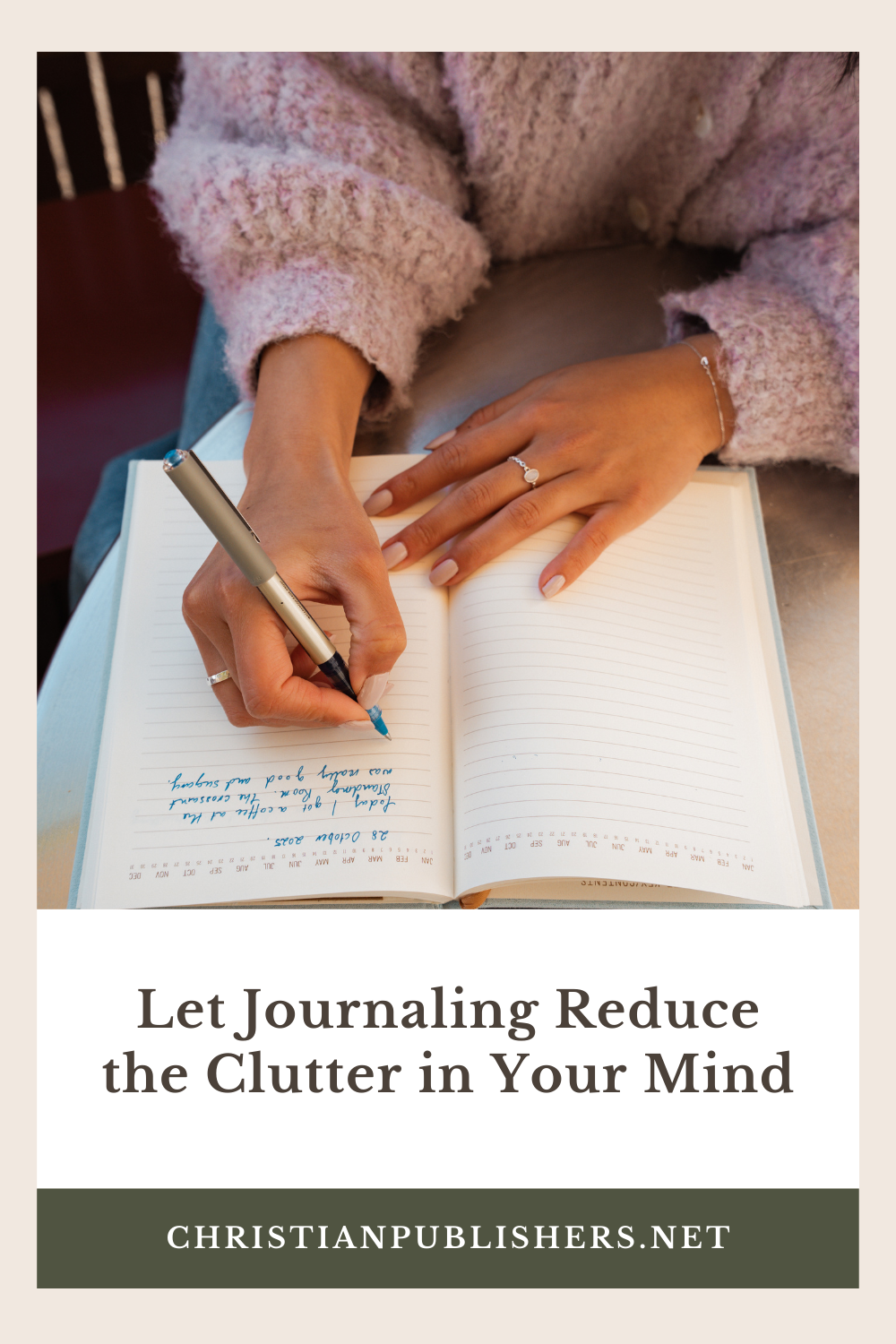
Let Journaling Reduce the Clutter in Your Mind
Mental clutter can destroy a healthy lifestyle. Organizing our thoughts and feelings through journaling can clear our minds so we can live a productive life. How difficult is it for you to set goals while your mind is overwhelmed with emotional noise and mental clutter? If we’ve learned nothing else from the Information Age, it’s that more isn’t always better. In fact, the more information we have, the more distracted and less effective we seem to become.
But it’s not the information’s fault. Information by itself is neutral, really, and having access to accurate data is good and necessary and important. The problem is our inability to cope with the sheer amount of it. We don’t know how to prioritize what we know, and without efficient priorities we can’t make effective decisions.
The clutter in our minds can derail a healthy lifestyle and even push us toward addictive behaviors like binge eating to cope with our mental, spiritual, and emotional stress. As a result, our lives spiral out of control. We ignore the important in favor of the urgent, and we fall prey to the chaos of the daily news cycle, the all-encompassing marketing tactics from every brand everywhere, the never-ending doomscroll of social media, and the mindless allure of streaming entertainment and YouTube videos. It’s no wonder we never get anything done, right?
With every passing day, more noise and clutter and mess and anxieties stack up in the corners of our minds, and soon we can’t tell the difference between a passing trend and what actually matters. If only there were a strategy that would help us weed out the clutter in our minds.
But wait! There is!
The practice of journaling has been part of human existence as long as written language has existed. We have examples of journals written thousands of years ago, detailing travels and trade routes. Some journals give insight to the everyday life of Japanese courtiers or the rigors of ruling a country from the perspective of kings and queens. But no matter who was writing a journal entry, the purpose was to clear the mind from spiritual, mental, or emotional clutter and to help the writer remember and focus on what mattered.
Even today, therapists and health professionals use various journaling techniques to help people reflect on and analyze their lives and choices.[i] Specialists at the Mayo Clinic have identified different types of journaling (i.e. diary keeping, reflective writing, expressive writing, therapeutic writing, etc.) that support and improve mental and emotional health.
With the world in more chaos than ever, adding a journaling practice to our everyday lives may be just the solution we need to help us narrow our focus and live intentionally. But with so many kinds of journaling, how can you know which one is right for you?
Here are ten variations on journaling that will help you reduce or even eliminate mental, spiritual, and emotional clutter in your life.

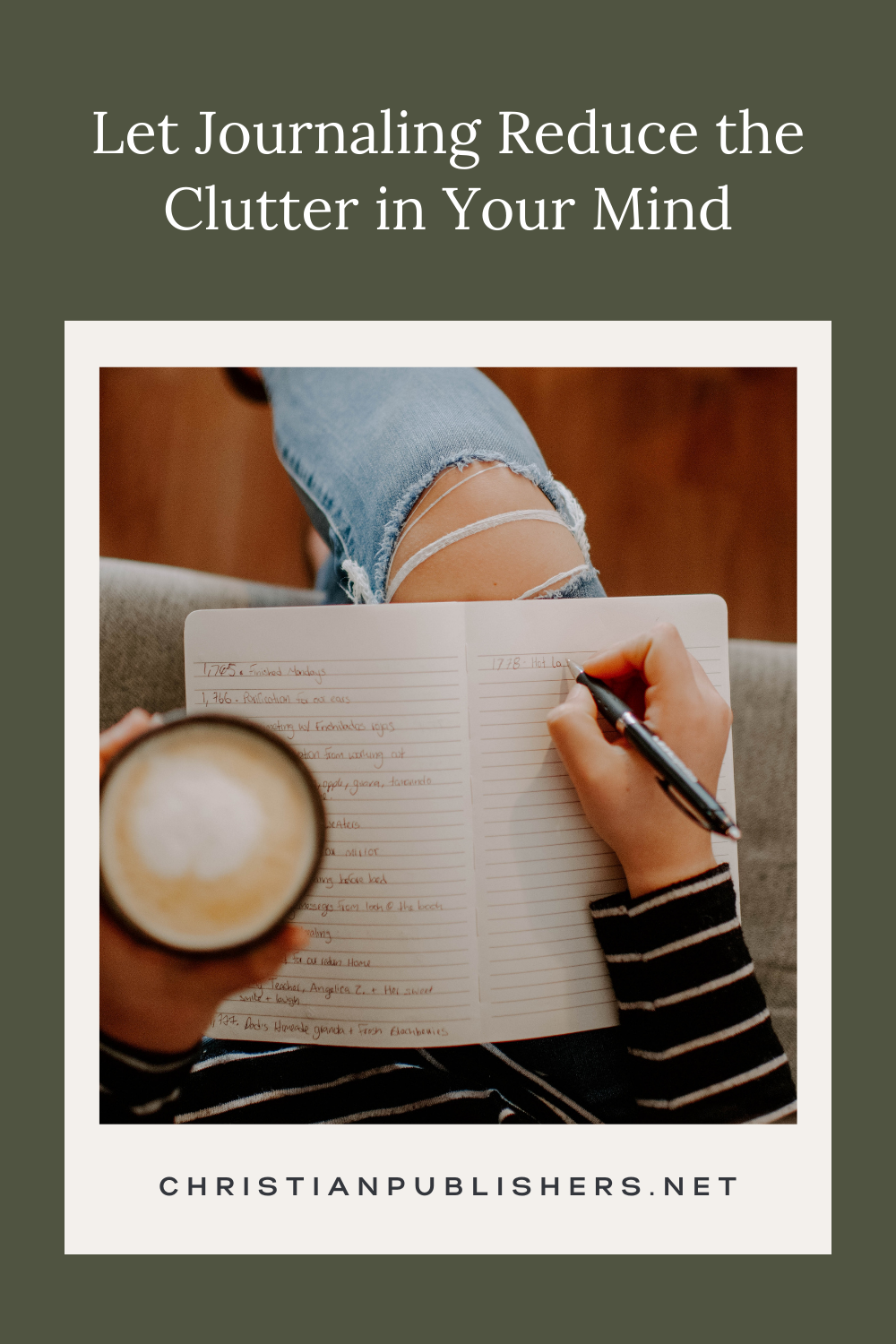
Personal Journaling
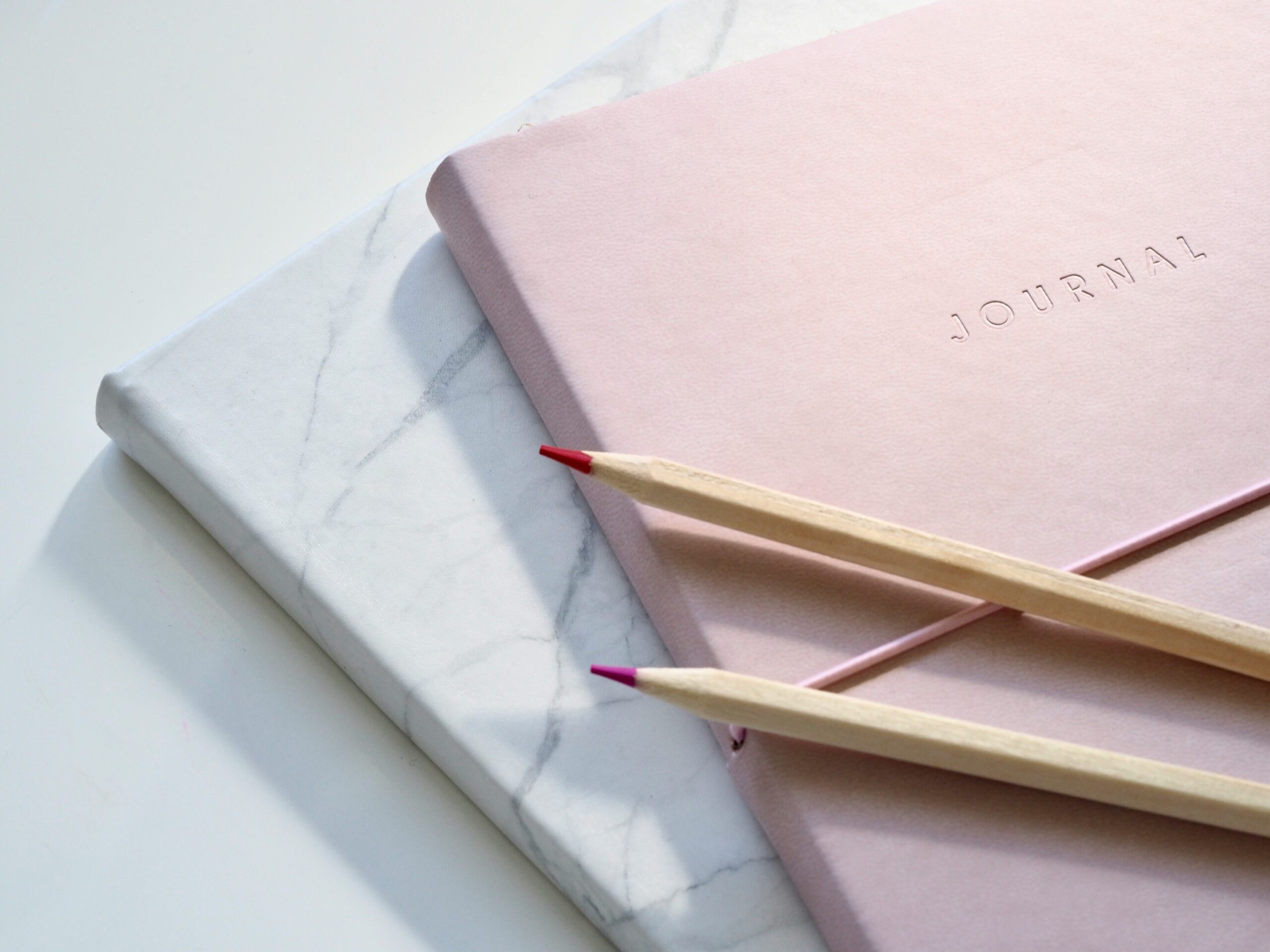
You might prefer to call this keeping a diary, but the discipline of personal journaling is simply making a note of what is happening in your life. This is usually a daily practice, and there is no common length or content standards. Personal journaling is a paragraph (or more) about something you want to remember. Diary keeping or personal journaling can also include Expressive Writing, which is a style of journaling that incorporates a person’s deepest thoughts and desires and how they feel about the future. For me, this practice takes the shape of what I call “Letters to God.” I have folded my daily journaling practice into my morning quiet time, and while I don’t have a set expectation for how long each entry needs to be, it always includes some direct, honest statements about how I’m feeling and how I feel God’s Word addresses my emotions.
Bullet Journaling
One of the most popular methods of journaling, bullet journaling has taken the whole world by storm. Developed in 2013 by Ryder Carroll, bullet journaling is primarily a mindfulness technique. It’s a system of tracking your to-do list, your future events, your daily accomplishments, and more in a compact, easy-to-access format. Many people have taken bullet journaling to another level by incorporating elements of art and other forms of creativity. But originally bullet journaling was a simple tool to help keep track of things that needed to be done—or to remind people of what they actually did. Bullet journaling is the greatest tool and resource for my own pursuit of mental health.
Reflective Journaling
Reflective journaling really works best in coordination with a bullet journal or a personal journal. I do reflective journaling on a weekly basis where I write my thoughts and feelings about how my week went. Obviously, there are as many ways to do this kind of journaling as there are people who do it, but the best way of using this style of journaling is to reflect on your goals and accomplishments. What worked? What didn’t work? What do you want to change for next week? This is an opportunity (weekly or daily or in whatever time frame best suits you) to evaluate your choices and be intentional about setting goals for the future.
Gratitude Journaling
One of the most popular forms of journaling is gratitude journaling. This form of journaling is used frequently among mental health professionals and plays a large role in improving a person’s overall health. This journaling practice is simply a regular time of reflection on your life to acknowledge what you are grateful for. Gratitude journaling can be done on its own or along with another variation of daily journaling.
Bible Journaling
A relative newcomer to the journaling industry, Bible journals are beginning to gain popularity. They usually include very wide margins with plenty of space to take notes or list cross references or annotations. This kind of journaling is helpful for supporting, improving, and maintaining your spiritual health because it encourages the practice of understanding and applying biblical truth to your life. But you don’t need a special Bible to do this. All you need is a Bible and a notebook where you can take notes. The best recommendation, however, is to make sure you use a Bible you are comfortable marking in. Personally, I suggest splurging on nice highlighters and pens.
Scripture Journaling
Scripture journaling is a little bit different than Bible journaling, primarily because it focuses on memorizing scripture rather than understanding and applying scriptural principles. Because memorizing anything is much easier if you first write it down, if you want to work on enhancing your personal vault of Bible verses, start with a Scripture journal. Having Bible verses readily available in your mind is a fantastic resource to use when dealing with anxieties or complex relationship dynamics.
Prayer Journaling
Prayer journaling is exactly what it sounds like: Writing down a list of prayers and keeping track of them. I don’t know about you, but I have so many people to pray for that I can’t remember them all. Having a prayer journal allows me not only to stay on top of the prayer requests in my community but also to track when a specific prayer request has been answered. Prayer journaling is a priceless treasure to be able to look back over your life and see how many of your prayers have been answered! It’s a straightforward way to help yourself remember God’s faithfulness over your lifetime of following Him.
Grief Journaling
Grief journaling may be considered a form of Expressive Writing, but the intention of grief journaling is to have space and room to intentionally process heavy emotions connected to loss and sorrow. This is a journal where you can get messy, where you write the things you would never say out loud, get real with God in the safety of knowing no one will ever see it. A grief journal, once full of entries, will basically be a collection of laments. This process is so necessary to manage grief in a healthy way. This is likely the most unpleasant form of journaling because working through hard emotions can be a challenge, but confronting our upsetting thoughts and feelings eventually opens the door to being able to release them.
Freewrite Journaling
I’m not sure I’ve ever seen this type of journal listed as a mental health aid, but as a non-morning person, it’s done wonders for me. So, I’m going to list it! The practice of freewriting is one of the best gifts you can give your brain. Freewriting is a set time where you get out a pen and a journal and just write. It can be stream-of-consciousness randomness that makes no sense. Nobody will see it. Nobody will read it. And it kickstarts your brain to put thoughts in order. It’s almost impossible to get your brain in a place to organize its thoughts if your brain can’t even express itself. Give yourself five minutes to freewrite and let your brain wake up.
Brainstorm Journaling
Finally, a brainstorming journal, or an idea journal, is an invaluable resource for creative professionals. This is simply a notebook where you write down your thoughts and ideas. Some people might consider this a commonplace book, but it’s really just a place to write down any thoughts that occur to you so that you don’t have to hold on to them. Since clinging to random thoughts takes up space in our brains, having a place ready to write those thoughts down will do you a world of good in alleviating pressure on your mind.
Journaling Makes a Difference!
Journaling is one of the greatest habits you can develop in order to effectively reduce mental, spiritual, and emotional clutter in your life. The practice is flexible and customizable to any healthy lifestyle or season.
For some amazing journaling and mindfulness resources, check out the Archer and Olive website for fantastic products to support all forms of journaling. For information on highly functional bullet journaling, take a look at the JashiiCorrin YouTube channel, which includes hundreds of hands-on videos and training.
Author Bio:
Amy (A.C.) Williams is a coffee-drinking, sushi-eating, story-telling nerd who loves cats, country living, and all things Japanese. Author of more than 20 books, she writes both fiction and non-fiction, and she currently works as a Fiction Instructor for the Author Conservatory, an online college alternative for writers. Whether you want a true story about her many adventures in the Guatemalan jungle or a fictional story about samurai superheroes, she’s got a book for you, and you won’t be able to put it down. If that’s your cup of tea (or coffee), join the fun at www.amycwilliams.com.
[i] Boehmer, Kasey R. “Journaling.” In Complementary Therapies in Nursing: Promoting Integrative Care (Manhattan: Springer Publishing Company, 2022): 222-233. https://doi.org/10.1891/9780826194992.0012).